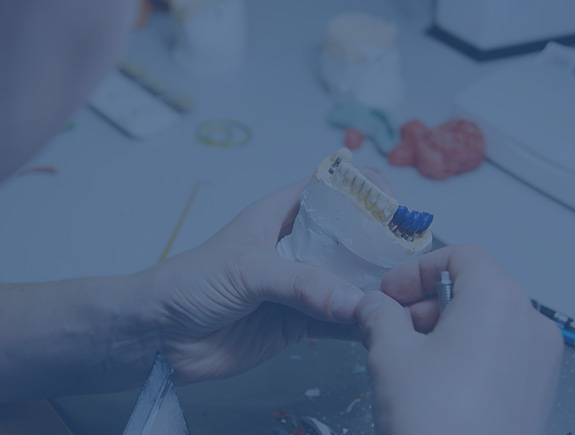
Denturist Diploma Program
Launch your career with comprehensive, flexible training in denturist.
Explore the Denturist Diploma Program
- Program Length: Three years
Maximum Time to Complete: 4.5 years
Quarter Credits: 138 (total)
Clock Hours: 4,060
Managed Clinical Experience: 16 Quarter Credits
Delivery Method: Distance Education
Denturist Diploma students engage in a blend of academic study, hands-on lab work, and real clinical experience that prepares them for the day-to-day responsibilities of a denturist. The curriculum covers essentials such as anatomy, dental sciences, radiography, infection control, oral pathology, and pharmacology, then advances into work with denture design and fabrication, implant-supported prosthetics, and the development of strong clinical and communication skills. Students also explore practice management and public health to support a confident transition into professional life.
The Denturist Diploma Program provides students with comprehensive instruction and practical training in the field of denturism. The curriculum prepares students to design, fabricate, fit, and adjust complete, partial, immediate, and implant-supported or implant-retained dentures. Students also learn to construct additional oral appliances such as mouthguards, whitening trays, and anti-snoring devices.
Academic studies include anatomy, oral pathology, dental materials, dental radiography, infection control, pharmacology, periodontology, nutrition, community oral health, ethics, practice management, and small business operations. Clinical and laboratory requirements ensure that students gain experience with patient care, treatment planning, prosthetic fabrication, and laboratory procedures.
The program follows recognized professional frameworks, including the International Baseline Competencies Profile for Denturist Education, Canadian Denturist Competencies and Learning Outcomes, the UK General Dental Council Preparing for Practice Learning Outcomes, and Oregon Board of Dental Technology Denture Technology Curriculum Objectives.
Graduates must complete the written and practical licensing examinations required by the jurisdiction in which they seek licensure.
Graduates of the Denturist Diploma Program will be able to:
Apply biomedical and behavioral sciences, professional ethics, and clinical decision-making frameworks to support safe, evidence-based denturist practice.
Evaluate the design, fabrication, fitting, and adjustment of dental prosthetics, including removable and implant-supported or implant-retained devices.
Deliver comprehensive clinical and laboratory care by constructing, adjusting, and maintaining prosthetic appliances, developing individualized treatment plans, and coordinating care with other dental professionals.
Demonstrate effective communication during patient consultation, education, and follow-up care while upholding ethical standards and promoting lifelong oral health.
Applicants to the Denturist Diploma Program must:
Be a high school graduate or have an equivalent credential (such as a GED).
Provide a valid government-issued photo ID.
Submit a completed Application for Admission and the $50 application fee.
Take the Admission Exam and earn the minimum score of 16 (exam fee: $50 each attempt).
Provide evidence of English language proficiency if English is not the applicant’s first language.
Additional documentation and full admissions policies are available on the Admissions page.
Your Course Path Through the Program
Foundational Science & Health Courses
These courses give students the scientific grounding they need to understand oral health, patient conditions, and the biological systems that influence denture treatment.
(4 Quarter Credit Hours)
This course helps you build a detailed understanding of the structures and mechanics of the head, face, and oral cavity. You will learn how muscles, nerves, joints, and bones work together, and how these structures influence denture fit, comfort, and function. The course also connects anatomy to biomechanics so you can better analyze patient movement, expression, and occlusion. By the end, you will have a clearer picture of how oral structures shape every step of prosthetic care.
Course Outcomes:
- Describe the anatomical features of the gingival unit, papillae, and salivary glands in relation to prosthetic design and patient care.
- Analyze the differences between centric occlusion and acquired bite in the context of removable prosthetic treatment.
- Differentiate intrinsic and extrinsic anomalies based on their impact on oral health and prosthetic outcomes.
- Compare jaw biomechanics to other joints to understand their role in denture fabrication.
- Identify facial muscles involved in expression and their influence on denture fit and aesthetics.
- Describe the structure and function of the sinuses and their effect on denture comfort and fit.
- Explain the purpose of lymph nodes and their importance in clinical assessment.
(4 Quarter Credit Hours)
This course introduces you to the microorganisms that influence oral health and the infection control protocols that protect patients and practitioners. You will learn how diseases spread, how to identify risks in the clinical environment, and how to apply safe and compliant infection control practices. You will practice proper handling, sanitation, and sterilization techniques that support quality patient care. By the end, you will understand how to maintain a safe dental setting and reduce the risk of cross contamination.
Course Outcomes:
- Explain the major categories of microorganisms and their relevance to infection control in dental practice.
- Explain the appropriate protective measures for staff and patients to mitigate the transmission of infectious diseases such as hepatitis and herpes.
- Identify the six pathways of cross-contamination and strategies to minimize risk in a clinical environment.
- Compare sterilization methods and determine the most effective techniques for dental office use.
- Demonstrate proper infection control procedures, including glove removal and prosthetic sanitation and transport.
- Explain the role of Safety Data Sheets (SDS) and how they support safe and compliant dental practice operations.
(3 Quarter Credit Hours)
In this course, you will explore common oral diseases and conditions and learn how to recognize, document, and assess them in clinical settings. You will study trauma, infections, autoimmune conditions, and systemic diseases that affect oral health and denture use. You will also learn how to evaluate lesions and conduct comprehensive oral examinations. By the end, you will feel more prepared to identify concerns that require referral or influence your treatment planning.
Course Outcomes:
- Explain the importance of early recognition of oral lesions in denturist practice.
- Evaluate appropriate treatment options for soft tissue trauma in a clinical setting.
- Compare and contrast autoimmune diseases affecting the oral cavity and explain their implications for denture treatment.
- Explain the oral and systemic effects of hepatitis and diabetes and their impact on denture wearers.
- Differentiate between genetic anomalies and neoplasms and their relevance in treatment planning.
- Describe the clinical presentation and treatment considerations for oral pathologies such as squamous cell carcinoma and fibrous dysplasia.
- Perform a step-by-step intra and extra oral examination and identify key indicators relevant to prosthetic care.
(4 Quarter Credit Hours)
In this course, you will study the tissues, cells, and developmental processes that shape oral structures. You will explore how teeth and surrounding tissues form, how they function, and how changes in these structures affect prosthetic treatment. You will also develop a clearer understanding of radiographic interpretation and how tissue health influences denture outcomes. By the end, you will be better prepared to evaluate oral anatomy and its relationship to patient care.
Course Outcomes:
- Describe oral tissue structure and function in relation to denture treatment.
- Analyze tooth development stages and their impact on prosthetic planning.
- Apply embryological knowledge to assess anatomical variations.
- Evaluate the role of saliva and effects of imbalance on prosthetic function.
- Interpret shading gradients on radiographs for prosthetic assessment.
- Explain the significance of the periodontium in prosthetic support and treatment outcomes.
(4 Quarter Credit Hours)
This course introduces you to the nutrients that support oral and systemic health and helps you understand how diet affects denture outcomes. You will learn how proteins, vitamins, hydration, and other nutritional factors influence healing, oral tissues, and the overall wellness of your patients. The course also explores health disparities and how nutritional needs vary across different populations. By the end, you will be able to apply basic nutrition principles to support patient education and preventive care.
Course Outcomes:
- Describe essential nutrients and their roles in supporting oral and systemic health.
- Review the Dietary Guidelines for Americans and their application in dental health promotion.
- Explain the impact of proteins, lipids, vitamins, and hydration on oral tissues and prosthetic outcomes.
- Identify nutritional factors associated with gingivitis, periodontitis, and edentulism.
- Identify methods for evaluating body composition and maintaining a healthy weight in relation to oral wellness.
- Analyze health disparities and how nutrition-related factors vary across populations based on gender, race, and socioeconomic status.
(4 Quarter Credit Hours)
You will explore the medications commonly encountered in dental and denturist practice and learn how they influence patient care. This course teaches you how drugs work, how they move through the body, and how to recognize potential interactions or contraindications. You will also learn to evaluate patient histories with a more informed perspective. By the end, you will feel more confident assessing medication risks and supporting safe treatment planning.
Course Outcomes:
- Recall major drug classifications and their basic mechanisms of action.
- Explain the principles of pharmacokinetics and pharmacodynamics.
- Apply knowledge of drug interactions and contraindications to evaluate patient scenarios.
- Analyze the effects of medications on various body systems and identify potential adverse reactions.
- Evaluate the appropriateness of drug therapies based on patient history and clinical presentation.
- Discuss ethical and legal considerations in the use and administration of pharmaceuticals.
MEDE 150 – Medical Emergency Care
(3 Quarter Credit Hours)
This course gives you a practical foundation for handling medical emergencies in a dental setting. You learn how to recognize common conditions that may affect elderly or medically vulnerable patients and how those conditions influence safe treatment planning. You also practice step-by-step responses to urgent situations like fainting, respiratory distress, diabetic events, and allergic reactions. By the end, you understand how preparedness, communication, and proper protocols help protect patients and support a safe clinical environment.
Course Outcomes:
- Explain major organ systems that require monitoring in elderly dental patients and their relevance to treatment planning.
- Demonstrate emergency procedures for unconscious patients and how to train staff in these protocols.
- Analyze how to respond to respiratory distress and its progression and impact in a dental setting.
- Identify the symptoms of diabetes and stroke in elderly patients and strategies to minimize risks during dental care.
- Describe how to manage incidents such as accidental swallowing of dental materials and apply preventive measures.
- Explain how to prevent and respond to allergic emergencies from drugs associated with anaphylaxis.
- Outline a step-by-step response to cardiac emergencies and assess the importance of emergency preparedness in dental practice.
(3 Quarter Credit Hours)
This course explores the health of the gums and supporting structures and connects periodontal science directly to denture treatment. You will learn how inflammation, disease progression, oral hygiene, and systemic conditions affect edentulous patients. The course also helps you identify signs of TMJ disorders and understand how dentures can influence function and comfort. By the end, you will be better equipped to evaluate periodontal health and support patients through preventive guidance.
Course Outcomes:
- Explain the formation and types of calculus and their impact on oral health, particularly for denture wearers.
- Analyze the role of biofilm in the oral cavity and its effects on prosthetic appliances.
- Discuss the relationship between poor oral hygiene and systemic conditions such as bacterial pneumonia in elderly patients.
- Evaluate gingival health classifications and their implications for denture prognosis.
- Describe the signs and symptoms of temporomandibular disorders and explain how dentures may contribute to or alleviate these conditions.
- Analyze the etiology of periodontal disease and apply patient counseling strategies to reduce risk and improve outcomes.
Professional & Practice Foundations
Students learn the standards, ethics, materials, and regulatory expectations central to safe and effective denturist care.
(5 Quarter Credit Hours)
In this course, you will explore the materials you will work with every day as a denturist, including impression materials, restorative products, and the supplies used in complete denture fabrication. You will learn how different materials behave, why certain products are chosen for specific procedures, and how composition affects clinical outcomes. The course also shows you how material science connects to patient comfort, safety, and long-term prosthetic success. By the end, you will feel more confident selecting and handling the materials used in both clinical and laboratory settings.
Course Outcomes:
- Describe the properties and uses of common dental materials, including impression materials, restorative materials, and cleaning agents.
- Explain how dimensional change, material composition, and physical form affect the performance and application of dental materials.
- Compare and contrast different types of dental waxes, stones, and alloys, and analyze their suitability for various clinical and laboratory procedures.
- Identify the characteristics and limitations of materials used in implantology, including ceramics and metals.
- Describe the sequence of clinical and laboratory steps involved in the fabrication of complete dentures and materials at each stage.
- Identify scholarly sources related to dental materials to apply evidence-based information to support material selection and patient recommendations.
(3 Quarter Credit Hours)
This course introduces you to the essential skills needed to understand and interpret dental radiographs in a prosthetic practice. You will learn how to identify anatomical structures, apply safety protocols, and recognize patterns that influence treatment planning. The course also helps you communicate radiographic findings using standard terminology. By the end, you will feel more confident using radiographs to support accurate assessments and clinical decisions.
Course Outcomes:
- Identify anatomical structures and bone types visible in dental radiographs.
- Explain the role of radiographs in denture treatment planning.
- Apply patient protection protocols during radiographic procedures.
- Use universal terminology to describe radiographic findings.
- Analyze radiographs to detect signs of periodontal disease.
- Compare 2D and 3D imaging for relevance to edentulous patients.
- Evaluate the ethical and legal implications of radiographic practices.
(3 Quarter Credit Hours)
In this course, you will learn how laws, ethical standards, and professional expectations shape denturist practice. You will explore informed consent, record keeping, patient privacy, and your responsibilities within the clinical setting. You will also examine how to navigate challenging scenarios and practice sound judgment in patient interactions. By the end, you will understand the ethical foundation that supports safe and accountable care.
Course Outcomes:
- Identify confidential information and responsibilities for protecting patient privacy.
- Describe informed consent procedures and consequences of non-compliance.
- Explain focused charting and its role in accurate patient records.
- Discuss student and instructor responsibilities in clinical competence and ethics.
- Evaluate patient refusal scenarios and professional responses.
- Compare standards of practice and legal requirements across jurisdictions.
(3 Quarter Credit Hours)
This course helps you understand how public health principles apply to individuals, communities, and the dental profession. You will explore how policies, health systems, and research practices influence population health and access to care. You will also learn how to evaluate data, identify community needs, and use evidence-based strategies to support better health outcomes. By the end, you will feel more prepared to work with diverse groups and understand the broader impact of dental care on public health.
Course Outcomes:
- Describe essential public health services and explain their role in improving population health.
- Interpret the impact of health policies and legislation on individual and community well-being.
- Assess the health education needs of individuals and communities to identify target populations for intervention.
- Apply public health principles and education strategies to real-world health issues.
- Analyze health-related data using research tools and evaluate population health status.
- Compare and contrast global health challenges and explain strategies used to address them across different regions.
- Explain cultural differences among populations and demonstrate professional and sensitive interaction with diverse groups.
Practice Management & Business Skills
These courses prepare students for the operational and financial realities of running or contributing to a denturist practice.
(3 Quarter Credit Hours)
This course introduces you to the fundamentals of running a small business and helps you understand what it takes to manage or own a denturist practice. You will explore topics such as business planning, marketing, financial management, and daily operations. The course also examines how entrepreneurs make decisions and navigate challenges in a competitive marketplace. By the end, you will have a stronger understanding of how successful dental businesses are built and sustained.
Course Outcomes:
- Explain how entrepreneurial and small business mindsets influence business development and strategic decision-making.
- Evaluate the advantages and disadvantages of starting versus purchasing a small business in relation to different entrepreneurial goals.
- Analyze the components of a business plan and how financial projections inform business decisions.
- Apply legal and ethical principles to small business operations to ensure compliance and responsible management.
- Develop a basic marketing strategy using marketing research and industry profiling.
- Identify how stages of the business lifecycle impact planning, sustainability, and long-term success.
- Explain the stages of the business lifecycle and assess how they affect planning and sustainability.
(3 Quarter Credit Hours)
In this course, you will explore the day-to-day operations of a denturist practice and learn how effective management supports high-quality care. You will study topics such as scheduling, communication, records management, and financial processes. The course also highlights the role of leadership, teamwork, and patient-centered service in building a successful clinic. By the end, you will understand how strong management practices contribute to a positive and efficient patient experience.
Course Outcomes:
- Explain the principles of organizational culture and the core functions of an effective denturist practice.
- Utilize management strategies to establish team goals to support collaborative dental care.
- Analyze methods to overcome communication barriers to improve patient engagement.
- Describe legal and ethical responsibilities in the dental business office and the role of technology in maintaining compliance.
- Assess how office design and information systems impact workflow and patient record management.
- Organize recall systems, inventory, and financial processes in a denturist office.
- Demonstrate infection control application protocols to maintain a safe clinical environment.
Clinical Prosthetics & Laboratory Skills
Students build the core hands-on skills needed to fabricate complete and partial dentures, from initial assessments to advanced setup and design.
(4 Quarter Credit Hours)
In this course, you will build the foundational prosthetic skills you need before entering patient care. You will explore how medical and dental histories guide treatment planning, and you will learn how anatomical landmarks, charting, and classification systems support accurate assessments. The course also introduces you to impression-taking concepts and the factors that influence prognosis and outcomes. By the end, you will feel more confident evaluating patients and preparing for hands-on clinical experiences.
Course Outcomes:
- Demonstrate how dental materials, nutrition, anatomy, physiology, pharmacology, and pathophysiology contribute to gathering dental history and patient assessment.
- Examine the significance of medical and dental history responses in shaping assessment, treatment planning, and prognosis.
- Develop a plan for conducting extra-oral and TMJ examinations to support treatment outcomes.
- Assess oral cavity landmarks and their condition to determine relevance to patient treatment and prognosis.
- Explain how the presence or absence of existing dentures affects treatment outcomes and the impression-taking process.
- Create a treatment plan that includes proper charting, correct abbreviations, and classification using the Prosthodontic Diagnostic Index for both edentulous and partially edentulous patients.
- Demonstrate professional responsibility by accurately preparing paperwork and calibration requirements for Managed Clinical Experience courses.
(4 Quarter Credit Hours)
In this course, you will learn the essential concepts behind impression techniques, model fabrication, and the early steps of complete denture construction. You will explore how materials, trays, and procedures contribute to accuracy, and you will examine why each step matters for patient comfort and long-term success. The course gives you a strong theoretical foundation that prepares you for the hands-on work you will complete in lab. By the end, you will understand how early clinical steps support the entire prosthetic workflow.
Course Outcomes:
- Analyze the purpose of preliminary and final impressions and identify appropriate materials and trays for each.
- Examine the function of custom trays and discuss how blocking out undercuts improves impression accuracy.
- Compare different impression materials and techniques and analyze factors influencing material selection.
- Identify types of dental stone and demonstrate proper techniques for pouring and trimming models.
- Explain the importance of final casts and discuss how accurate dimensions affect prosthetic outcomes.
- Compare techniques for taking occlusal bites and compare CO, CR, and VDO.
- Evaluate the advantages and limitations of various centric relation taking techniques.
CDNT 301 – Clinical Prosthetics: Lab
(4 Quarter Credit Hours)
This hands-on course allows you to apply the concepts you learned in CDNT 300 by practicing impression-taking, tray fabrication, and cast development on simulation models. You will work directly with materials and equipment to gain confidence in each step of the denture fabrication process. You will also focus on accuracy, consistency, and proper safety techniques as you build foundational clinical skills. By the end, you will be ready to transition into more advanced laboratory and clinical experiences.
Course Outcomes:
- Demonstrate proper techniques for taking preliminary and final impressions on a simulation head.
- Pour diagnostic and master casts accurately using appropriate materials and methods.
- Design and fabricate custom impression trays tailored to simulation models.
- Perform border molding and take maxillary and mandibular final impressions on simulation models.
- Construct base plates suitable for prosthetic fabrication.
- Apply infection control and safety protocols during all laboratory procedures.
(4 Quarter Credit Hours)
In this course, you will build on your foundational knowledge by exploring tooth selection, articulation, occlusal concepts, and aesthetic design. You will learn how to analyze patient needs, evaluate try-ins, and understand the clinical reasoning behind advanced denture procedures. The course helps you connect theory to real-world decision making, especially when working with patients who require customized prosthetic solutions. By the end, you will feel prepared for advanced laboratory work and confident in your ability to approach complex denture cases.
Course Outcomes:
- Examine the principles of articulation and model analysis in complete denture fabrication.
- Apply the criteria for selecting artificial teeth and techniques for setting them in functional and aesthetic arrangements.
- Compare the theories behind setting upper and lower anterior and posterior teeth and analyze their impact on occlusion.
- Analyze various aesthetic techniques and explain the purpose of clinical try-ins in evaluating denture fit and appearance.
- Compare occlusal schemes for Class I, II, and III bites and evaluate their application in patient-specific cases.
- Outline the process for delivering prosthetics and discuss strategies for patient education and adaptation.
- Apply methods for equilibration and patient satisfaction after identifying common post-insertion issues such as sore spots and occlusal discrepancies.
(9 Quarter Credit Hours)
This advanced lab course gives you the opportunity to practice comprehensive denture fabrication, including tooth setup, wax-ups, articulation, and final preparation. You will apply the techniques you learned in CDNT 311 and work through each step of the process in a structured, hands-on environment. The course reinforces accuracy, sequencing, and attention to detail, which are essential for successful prosthetic outcomes. By the end, you will have experience completing the full workflow for a complete denture simulation case.
Course Outcomes:
- Demonstrate articulation and model analysis techniques to prepare for denture fabrication.
- Construct base plates using simulation models.
- Apply procedures for setting anterior and posterior teeth in simulated prosthetic setups.
- Perform wax-ups for final try-ins and explain their role in evaluating denture fit and aesthetics.
- Integrate multiple prosthetic steps into a cohesive workflow for complete denture simulation.
- Examine the rationale behind each laboratory procedure and identify common errors to avoid during denture setup.
(4 Quarter Credit Hours)
In this course, you will explore the principles behind designing removable partial dentures and learn how to assess partially edentulous patients. You will study classification systems, design components, and treatment planning strategies that help guide clinical decision making. The course also introduces impression techniques and emerging technologies used in partial denture fabrication. By the end, you will understand how theory supports effective planning for a wide range of partial denture cases.
Course Outcomes:
- Interpret treatment options for partially edentulous patients, including the role of removable partial dentures and the collaborative planning process among dental professionals.
- Analyze the Kennedy Classification system to support accurate diagnosis and effective treatment planning for removable partial denture cases.
- Design removable partial dentures using principles of clasp types, rests, connectors, and occlusal relationships tailored to various Kennedy classifications.
- Implement appropriate impression techniques and initial design strategies in the clinical and laboratory phases of removable partial denture fabrication.
- Evaluate the effectiveness of surveying and troubleshooting techniques in resolving fit issues with removable partial dentures.
Differentiate between materials, fabrication methods, and emerging technologies, such as printing and milling, used in the construction, relining, and repair of removable partial dentures
(8 Quarter Credit Hours)
This hands-on lab course gives you practical experience designing and fabricating removable partial dentures. You will work with diagnostic casts, frameworks, teeth, and materials to apply the principles you learned in RDNT 320. The course also prepares you to complete repairs, relines, and adjustments while evaluating fit and function. By the end, you will be confident moving through the full laboratory workflow for partial denture fabrication.
Course Outcomes:
- Design removable partial dentures with appropriate rests, clasps, and connectors by surveying diagnostic casts.
- Prepare accurate laboratory prescriptions for the fabrication of removable partial dentures.
- Set up denture teeth on partial denture frameworks and apply proper techniques for wire bending in temporary prosthetics.
- Identify techniques for relining, rebasing, and repairing removable partial dentures.
- Analyze fit and function to troubleshoot common issues in removable partial dentures.
- Create a step-by-step procedure of the care of patients with removable partial dentures from assessment to follow-up.
(4 Quarter Credit Hours)
In this course, you will explore how denturists design and deliver prosthetics that work with implants, including both single units and more complex cases. You will learn about diagnostic considerations, patient factors, attachment systems, and the components involved in fixed and removable implant-supported dentures. The course also introduces you to planning concepts such as immediate dentures and hybrid prosthetics. By the end, you will feel more confident evaluating implant cases and understanding the clinical steps that support successful outcomes.
Course Outcomes:
- Examine the collaborative role of the dental team in the design, fabrication, and delivery of immediate and implant-supported prosthetics.
- Compare the design and fit considerations of single implant prosthetics versus natural dentition.
- Analyze patient-specific factors that influence the planning and delivery of immediate dentures and discuss their clinical implications.
- Describe the rationale and components involved in designing removable implant-supported dentures and fixed removable hybrid prosthetics.
- Describe the processes and components used in fabricating bars, attachments, and substructures for implant prosthetics.
- Apply knowledge of relining, rebasing, and repairing techniques to maintain implant-supported dentures.
- Analyze post-insertion care protocols and evaluate troubleshooting strategies for removable and fixed removable implant prosthetics.
(8 Quarter Credit Hours)
This course gives you hands-on practice fabricating implant-supported dentures using both simulated and lab-based workflows. You will work with components, frameworks, impressions, and setups to understand how each step influences retention, stability, and patient comfort. The course helps you build confidence in both immediate and implant-retained prosthetic procedures. By the end, you will be able to complete essential laboratory steps that support a wide range of implant-supported prosthetics.
Course Outcomes:
- Create, including design and set up, a single implant supported prosthetic and an immediate denture against natural dentition, ensuring proper occlusion and aesthetics.
- Construct an upper denture opposing a locator-retained or Hader bar-retained lower denture by evaluating retention and support considerations.
- Compare different implant-supported prosthetic configurations by analyzing their clinical applications.
- Demonstrate proper laboratory procedures for implant-supported prosthetics, including impression handling and component integration.
Clinical Experience Sequence
Students apply their learning in real clinical environments with increasing independence.
(3 Quarter Credit Hours)
In this introductory clinical course, you will learn how a working denturist clinic operates and what it means to provide safe, ethical, and patient-centered care. You will observe experienced practitioners, participate in basic assessments, and begin performing preliminary clinical tasks under supervision. The course helps you connect your classroom learning with real patient situations and develop confidence in early clinical responsibilities. By the end, you will understand the expectations, workflow, and foundational skills needed for your future clinical experiences.
Course Outcomes:
- Demonstrate an understanding of clinic policies and procedures prior to beginning to see patients, including clinic handbook, MSDs, safety protocols, and any other required training.
- Demonstrate an understanding of private clinic financial practices and scheduling procedures.
- Perform intra and extra oral examinations, TMJ evaluations, and radiographs as necessary, and document all findings while reviewing medical and dental history in the assessment of removable prosthetic patients.
- Demonstrate professional competency by obtaining informed consent and effectively communicating treatment plans, patient education, and financial options according to clinic policies.
- Perform an evaluation of a patient’s current prosthetics and determine, with the patient, an appropriate treatment plan.
(3 Quarter Credit Hours)
In this course, you will build on your early patient-care skills by performing hands-on assessments, preliminary impressions, and basic laboratory procedures. You will complete repairs, relines, and other essential tasks that support accurate diagnosis and treatment planning. The course also strengthens your communication and patient-care skills by guiding you through aftercare and follow-up conversations. By the end, you will feel more confident managing foundational procedures independently.
Course Outcomes:
- Perform necessary impressions, trays, and models to prepare master casts.
- Perform a tooth repair on full and partial dentures.
- Perform an upper and lower crack repair.
- Perform an upper and lower reline, including a laboratory soft rebase and an implant rebase.
- Prepare a centric recording device, create bite rims, and record centric relation for the patient.
- Provide patient aftercare based on treatment performed.
(4 Quarter Credit Hours)
This mid-program clinical course helps you take on more responsibility by managing complete and immediate denture cases from start to finish. You will conduct assessments, create treatment plans, fabricate prostheses, and provide follow-up care while documenting each step. The course also exposes you to collaboration with other dental professionals and teaches you how to navigate more complex patient scenarios. By the end, you will feel more capable of managing full cases with increasing independence.
Course Outcomes:
- Demonstrate clinical competence in the design, fabrication, and delivery of an upper and lower denture.
- Demonstrate clinical competence in the design, fabrication, and delivery of upper and lower immediate dentures.
- Demonstrate clinical competence in the design, fabrication, and delivery of a single upper or lower denture opposing natural dentition.
- Provide prosthetic aftercare during healing following insertion of immediate dentures or placement of implants.
(4 Quarter Credit Hours)
In this advanced clinical course, you will focus on removable partial dentures and cases that require higher-level reasoning and problem solving. You will work with partials, implant-retained prosthetics, and cases that blend complete and partial denture concepts. The course also introduces digital elements that support modern denture workflows. By the end, you will be comfortable navigating more complex clinical situations and making informed decisions during treatment.
Course Outcomes:
- Demonstrate clinical competence by designing, fabricating, and delivering an upper partial denture and a lower partial denture.
- Demonstrate clinical competence by designing, fabricating, and delivering an upper denture and a lower partial denture.
- Demonstrate clinical competence by designing, fabricating, and delivering an upper or lower implant retained prosthetic.
(2 Quarter Credit Hours)
This capstone clinical course represents the culmination of your training and gives you the opportunity to manage complex patient cases independently. You will collaborate with laboratories and other providers, such as oral surgeons, to support comprehensive care. The course also requires you to demonstrate your full knowledge through written and practical examinations, including OSCE-style assessments. By the end, you will have proof of your readiness to enter professional practice with confidence.
Course Outcomes:
- Apply advanced clinical knowledge and skills to independently manage complex cases.
- Use effective professional communication skills to coordinate with all parties involved in treatment, including laboratories and oral surgeons.
- Demonstrate comprehensive knowledge of the discipline by completing a written, practical, and OSCE examination that reflects all program areas.
Ready to Get Started?
We’re here to help you chart your path into the denturist profession. If you’re unsure whether the Diploma Program is the right next step, our team can walk you through the requirements, expectations, and career pathways so you can move forward with confidence.